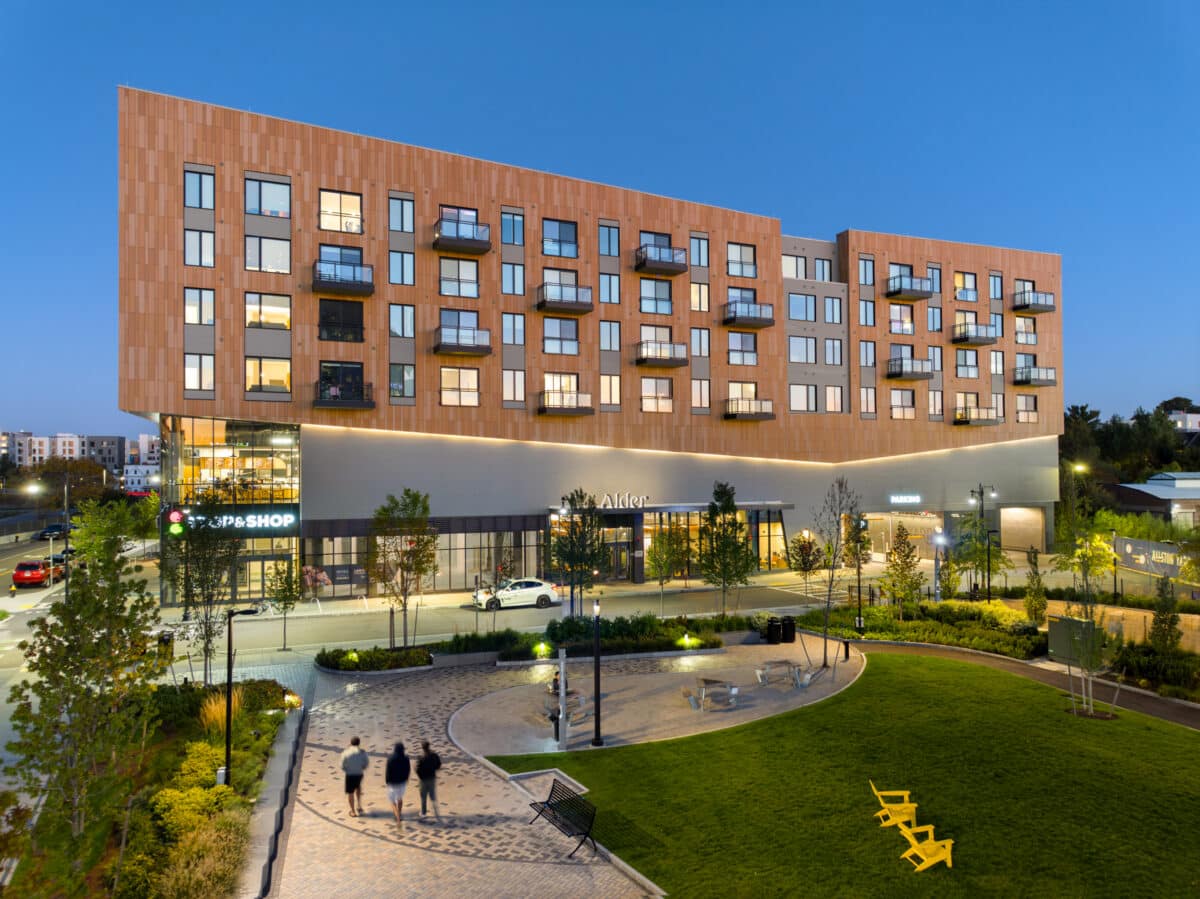
Allston Yards

Allston Yards Building A is a landmark mixed-use project featuring 165 residential units above a podium level that houses retail and parking. The residential component includes four stories of wood-framed apartments with amenity spaces and a fitness center. Below the podium, two levels accommodate retail lobbies, a fully fitted Stop & Shop grocery store, parking, storage, and MEP services. Additionally, two below-grade levels provide underground delivery corridors and structured parking with approximately 295 spaces.

Situated within the existing Stop & Shop Shopping Center parking lot, the site is bounded by the Mass Pike and Boston Landing commuter rail station to the north, with major streets on its other sides. Early project work included constructing an expanded parking lot to offset retail parking needs, utility, and roadway upgrades for future street connections, and demolishing the existing Home Goods/Dollar Tree building to pave the way for continued development.

Photography: © Ed Wonsek
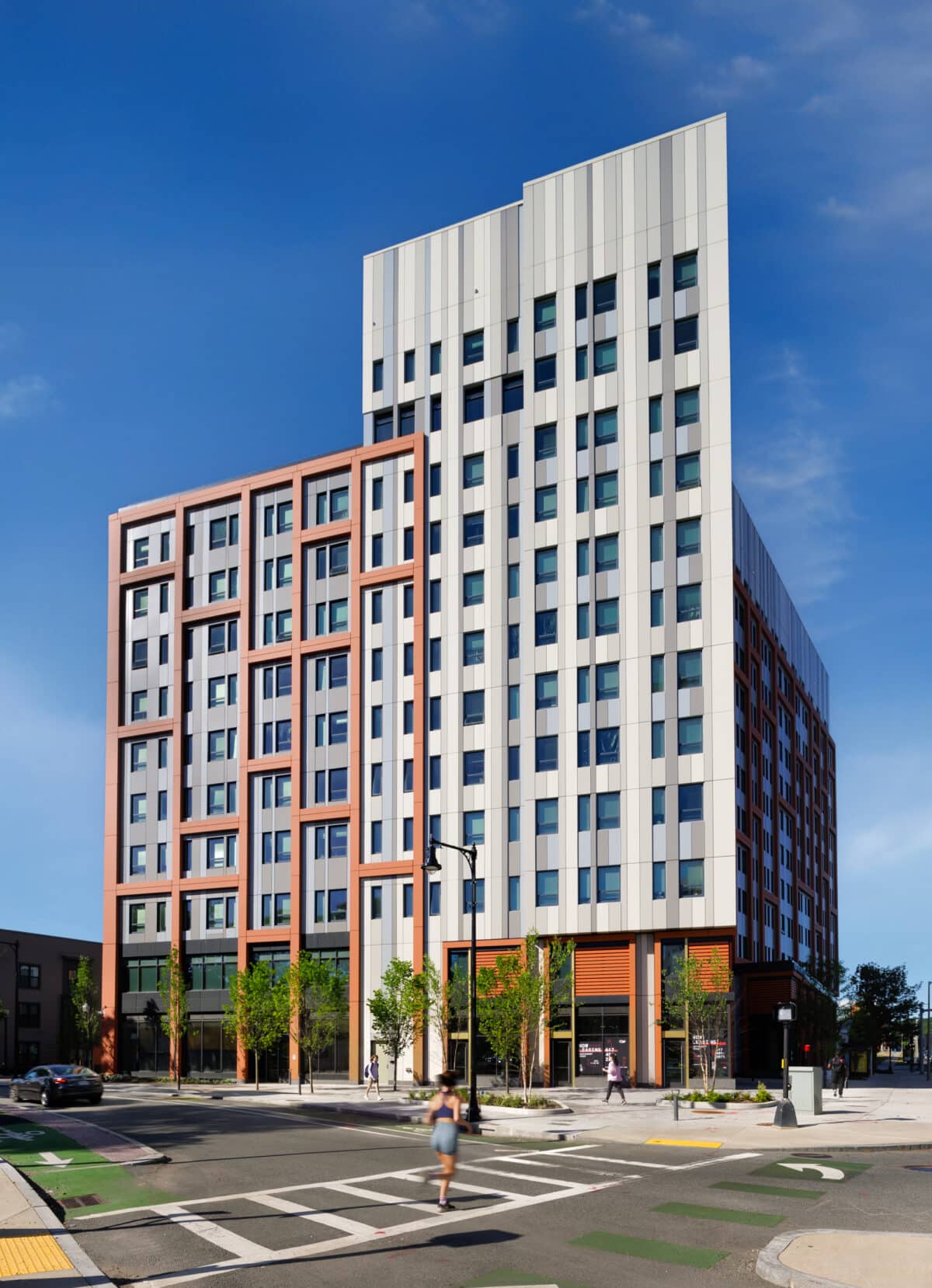
Whittier Choice Apartments, Phase 3

The new concrete frame structure consists of two levels of post-tensioned podium under 10 Levels of LG frame and offers 172 units of housing. Phase 3 also features 2nd-level parking consisting of 45 spaces over retail, lobby, and BOH spaces.

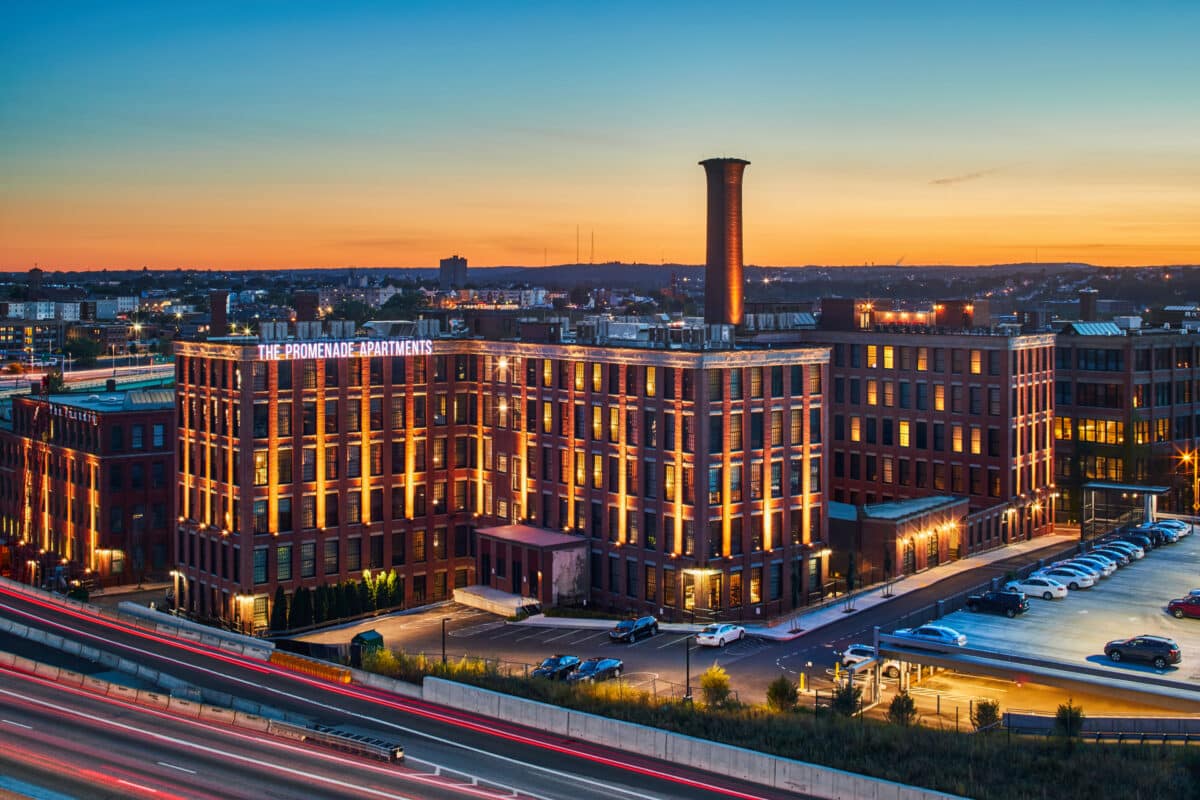
Sharpe Building at the Foundry

The Sharpe Building at the Foundry converted a six-story historic industrial building into 196 market-rate apartments. The structure features steel and brick arch construction, wood-plank floors, and large wood windows. A 135-foot-tall chimney rises 65 feet above the roof, making it one of the highest points in the city.

The apartments include studios, one-bedroom, and two-bedroom units. The scope of work included new mechanical, electrical, plumbing, fire protection systems, and new elevators and stair towers. Amenities consist of a fitness center, theater, and rooftop deck. The project is part of a 26-acre live-work complex with 13 historic buildings, all restored to their original exposed brick character from the late nineteenth and early twentieth centuries.

Photography © Robert Benson Photography

The Residences at Forest Hills

This project transformed the former parking lot at the corner of Washington Street and Arborway into a vibrant, pedestrian-friendly, transit-oriented community offering market-rate and affordable workforce housing with easy access to the Orange Line. The development consists of two building complexes with 250 residential units.

The structural system includes steel framing with composite concrete slabs supported by spread footing foundations on improved soils up to the podium level. Above the podium, five levels of structural wood framing provide efficient construction. The exterior combines cement fiberboard panels, vinyl doors and windows, PVC trim, aluminum storefronts, and a PVC roof membrane. Interior construction features metal stud framing, gypsum wallboard partitions, vinyl plank flooring, carpet, Dolce Vita kitchen cabinets, and gypsum board ceilings. Each unit has a Navien mechanical system supported by rooftop condensing units.

Building 1 includes one retail level topped by five residential floors. Building 2 consists of two towers connected to the basement by a parking garage with 120 spaces. It offers six residential levels with amenities, including a fitness center, yoga studio, clubhouse with a teaching kitchen, gathering spaces, theater room, bicycle storage and maintenance areas, and electric vehicle charging stations.

Street-front retail and restaurant space is designed to support local merchants and complement existing neighborhood retail along Washington Street.

Photography: Anthony Crisafulli Photography

Old Colony Phase 6

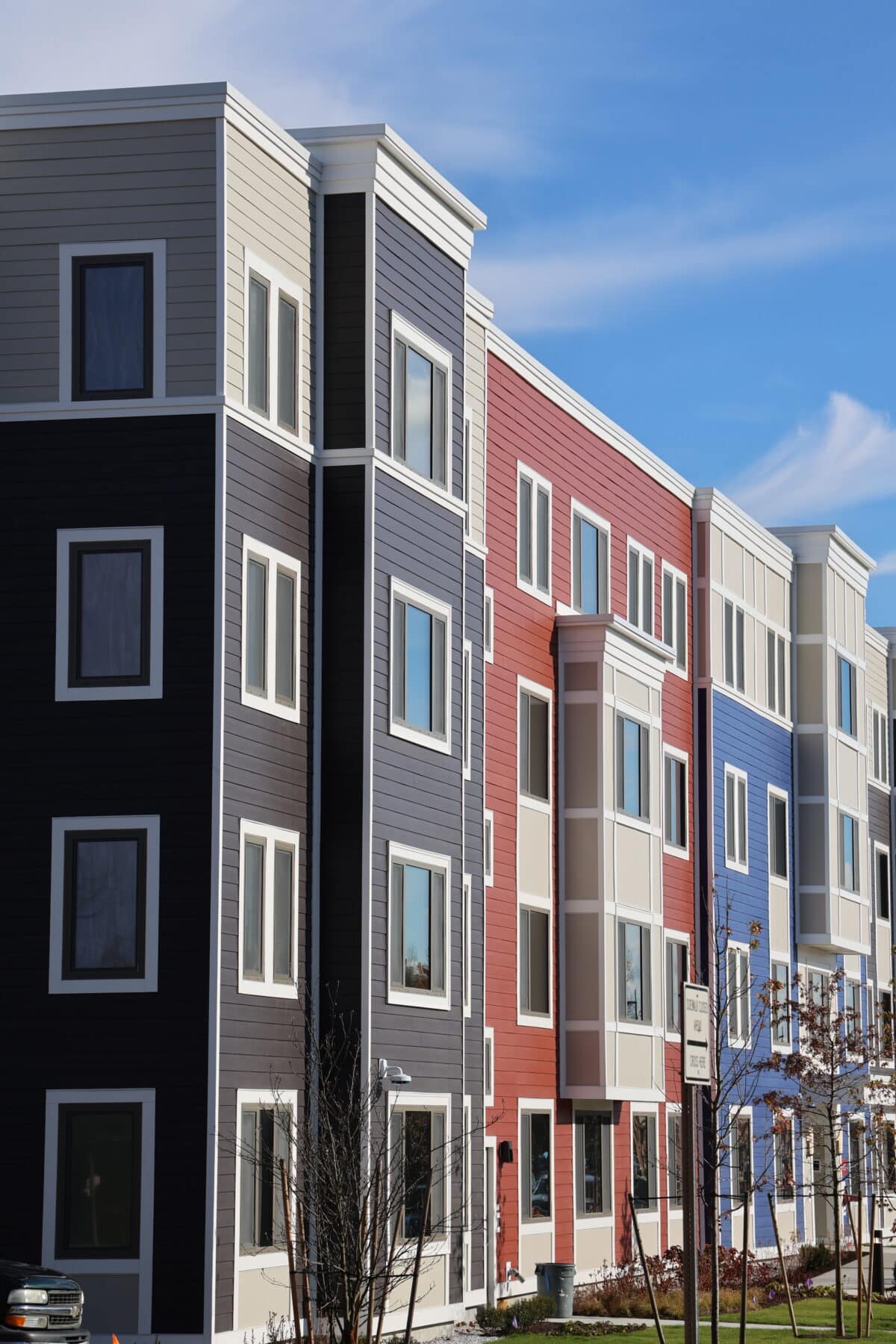
Old Colony Phase 6 completes the long-running revitalization effort that began in 2011, delivering a five-stories of affordable housing units. The project also features two dedicated community spaces for a local arts organization, enhancing neighborhood engagement and cultural vitality. Built to LEED Gold standards under the LEED Multi-family Midrise v4 and PHIUS Core 2021 certifications, this phase exemplifies a commitment to sustainable, high-performance living environments.

Curtis Apartments Redevelopment, Phase 1&2

The Curtis Apartments Redevelopment is revitalizing the Great Brook Valley neighborhood. Phase 1 introduces two timber-framed buildings, offering 129 modern apartments and enhanced outdoor amenities such as a playground, outdoor fitness equipment, and a splash pad. Phase 2 expands the community with five new buildings, including additional apartments, a community library, an employment and career center, and green spaces, fostering a vibrant and connected environment.

Designed with sustainability in mind, the project aims for LEED Gold certification and adherence to PHIUS Core 2021 standards, ensuring energy-efficient and environmentally responsible living spaces.

775 Huntington Ave

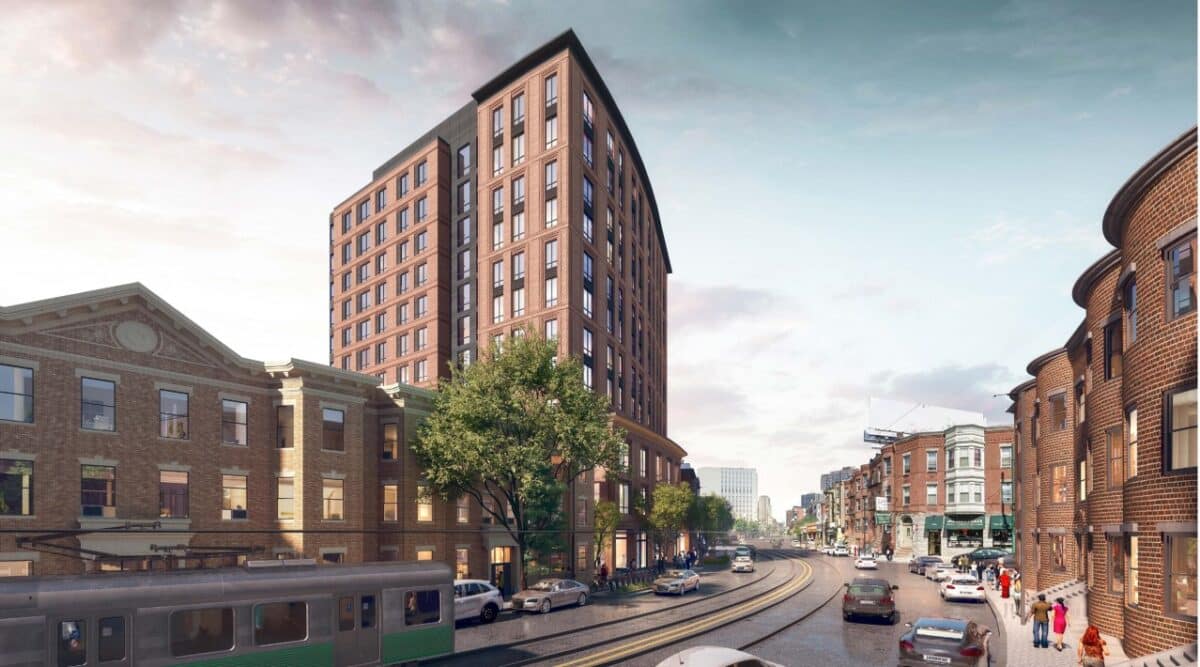
The 775 Huntington project is a new 13-story cast-in-place residential building offering 112 thoughtfully designed income-restricted homes alongside market-rate units. The development features one level of underground parking and a range of amenity spaces that enhance community living. By combining affordable rental and homeownership options, the project supports diverse housing needs and contributes to neighborhood vitality. Fully approved and backed by state and local resources, it transforms a previously vacant lot into a vibrant residential destination.

41 LaGrange Street

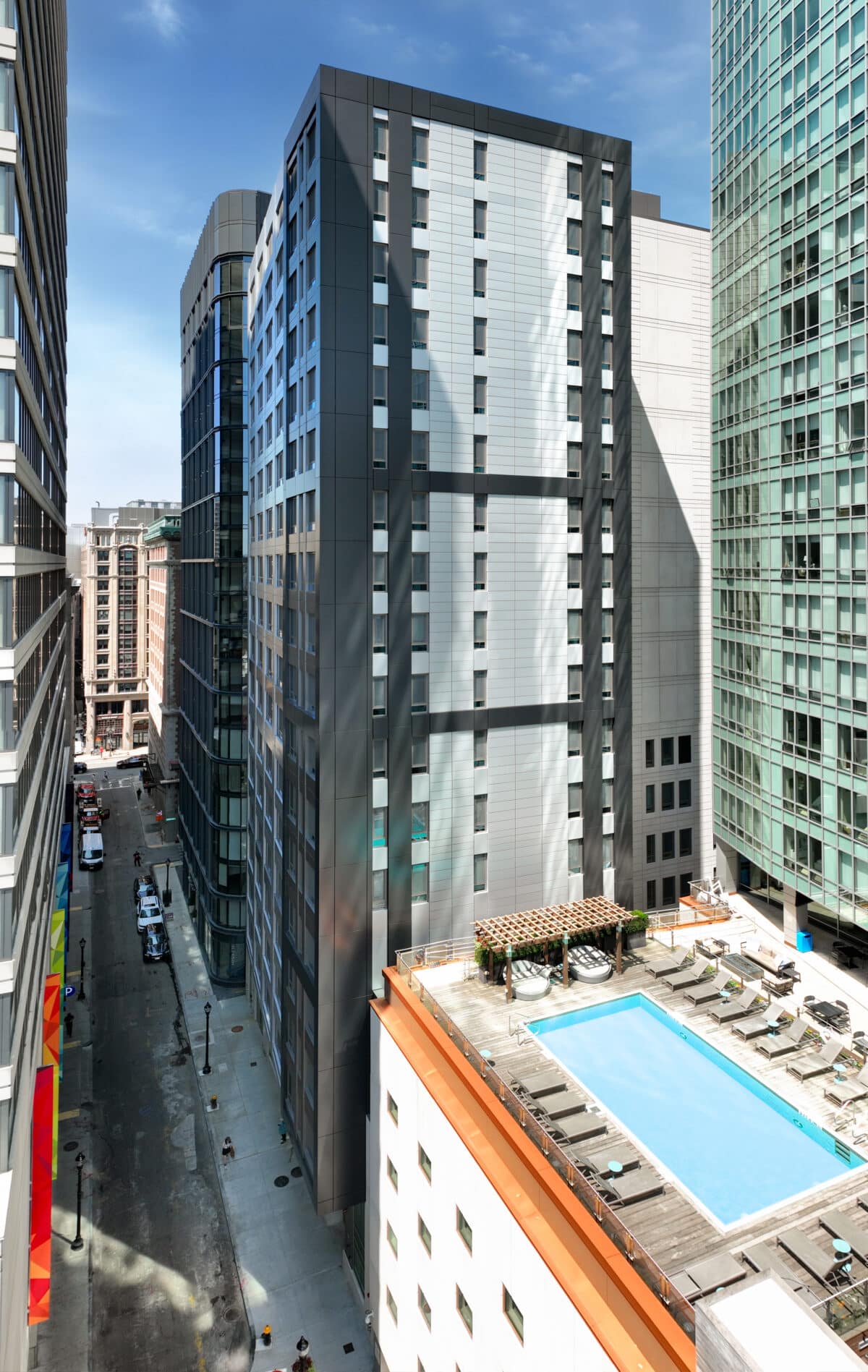
The 19-story, 126-unit affordable housing high-rise at 41 LaGrange Street features a cast-in-place concrete structure with two cores—one housing elevators and stairs, the other stairs only. Designed with various envelope assemblies, including precast panels, metal cladding, punched windows, and curtainwall on the lower levels, the building balances durability and modern aesthetics.

This studio, one-, and two-bedroom residence incorporates advanced mechanical systems, including Electric VRF HVAC, rooftop emergency power, and a ground-level fire pump, all supported by strategically placed electrical vaults. Constructed on a tight, logistically complex site, the project used a tower crane within the building footprint, a double man and material hoist, and a carefully coordinated delivery schedule to mitigate risks and maintain workflow efficiency.

Soundview Landing Phase 1-3

The Washington Village Redevelopment replaced a 136-unit public housing development with a new 273-apartment community, with half of the units reserved for public housing residents. The three-phase initiative took place in a coastal flood zone and moved forward in tandem with the City’s reconstruction of Raymond and Day Streets to reduce future flood risk.

The site includes surface and exterior parking, landscaping, lighting, street trees, and sidewalks. As a public-private partnership, the project followed two Section 3 guidelines and closely collaborated with federal, state, and local agencies.

Multiple funding sources supported the redevelopment: 1.5 million from HUD’s Choice Neighborhoods Initiative through the Norwalk Housing Authority, 11.9 million in Community Development Block Grant Disaster Recovery funds from the Department of Housing, 5.8 million from Goldman Sachs through the Norwalk Housing Authority, 1.3 million from the Connecticut Department of Economic and Community Development for brownfield remediation, 20.7 million in Low-Income Housing Tax Credit equity from Goldman Sachs, and 19.2 million in construction financing from TD Bank.

Photography: © Andy Ryan

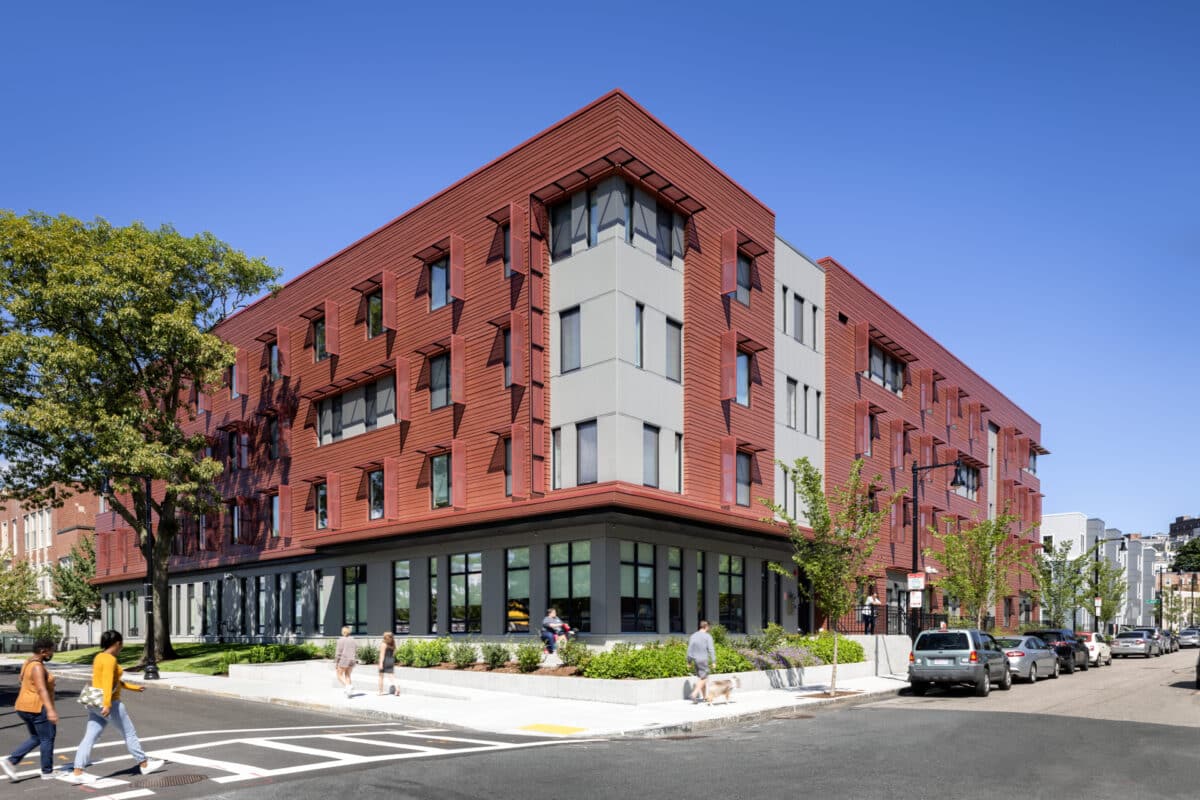
Old Colony Phase 3B & C

Phase 3 B&C of the Old Colony redevelopment advances a long-term public housing transformation in South Boston. Designed by The Architectural Team, this phase delivers 170 new residences across two buildings, enhancing access to high-quality, energy-efficient housing for families, seniors, and individuals with disabilities.

Building B provides 115 one- to four-bedroom units within a four-story structure that also houses ground-level property management and maintenance services. Building C introduces 55 affordable apartments designed to meet the needs of senior and disabled residents and stands as one of Boston’s first PHIUS-certified public housing projects.

The development, which received the PHIUS National Passive House Projects Award for Best Low-Rise Multifamily Design, sets a new benchmark for sustainability, performance, and inclusive community design.

Photography: © Ed Wonsek